Cristina Emberton, M.Ed.
Instructional Designer
ePortfolio
cemberto@utk.edu
912-313-8960
Educational Media
Executive Summary
Art & Technology Collaborative Teaching Module
The requirements for this artifact included developing an instructional website for a school district or as a support tool for teacher. As part of the integration process, a prototype website was expected. The objective of this project is to demonstrate the collaboration of art and technology while teaching Inquiry and Information Fluency to 5th - 6th grade students.
A process of research, understanding, analyzing, creating and evaluating is presented throughout the lessons engaging an understanding of project-based learning for each student.
In Lesson One, students will be introduced to three different art genres and artists. Students will gain knowledge of how to identify characteristics of artistic time periods, compile research, and present information in an organized manner. Students will self-determine goals and be introduced to technologies such as digital photography and web 2.0 tools. They will be required to utilize these technologies during their project.
Lesson Two introduces ethics and a variety of plagiarism issues within art. The purpose is to help students define a difference between being influenced by another artist and plagiarizing another artist’s work. It is also presented in a way that collaborates new controversies with technology in the art world. Students will be presented with examples of plagiarism and a current dispute as a case study. Topics such as Fair Use, ethics, and copyright laws are covered.
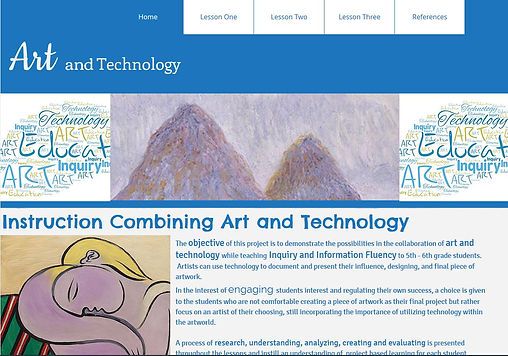
Artists can use technology to document and present their influence, designing, and final piece of artwork. The module consists of three lessons and are based on Standards for Common Core, 21st Century Learner Goals and standards required by the American Association of School Librarians. These standards, skills indicators, disposition indicators, responsibilities indicators, and self-assessment strategies indicators are specifically covered in the printable format of each lesson plan. A connection to Georgia state standards for Fine Arts Education is also included.
Within the objectives of Lesson Three, students are guided through the design process. This is the final lesson of three in order for the students to reach their goal to produce and document their work. The students have been shown Web 2.0 tools and this lesson will be instrumental in guiding the learners in developing their presentation and evaluating their work.
Project Reflection
My undergraduate degree is a Bachelor of Fine Arts and have continued working as an artist outside of my professional environment. My background includes marketing and art education. This project was a joy to produce as I felt in my comfort zone. I was able to collaborate technological materials into an art education lesson providing opportunities for students to work with both simultaneously. It specifically integrates AASL Standards into the lesson and I was able to provide specific directions and support visuals for teachers to use in the future. I developed skills in collaborative lesson planning as well as making it accessible in print and on the web. I feel confident in my ability to create instructional design materials and use successful assessments strategies. This projected expanded my background in the visual arts with the collaboration of technology. The specific lesson (Lesson 2) covering the topic of plagiarism and Fair Use demonstrates my ability to coordinate and implement instruction encouraging facets of ethical responsibility in students. I will be able to utilize this knowledge when coordinating new projects and developing lessons that need to be fun and engaging.